Commercial Bathroom Remodel Services in Charlotte, Tennessee
Commercial bathroom remodel services in Charlotte, Tennessee, can help businesses create restrooms that are comfortable, durable, and easier to maintain. Whether you are updating a customer-facing restroom, improving facilities for employees, or renovating a space as part of a broader commercial project, thoughtful planning can make the finished bathroom work better for daily use. A remodel may include replacing worn fixtures, updating sinks and toilets, improving lighting and ventilation, refreshing wall and floor finishes, and making better use of available space. Accessibility, privacy, reliable plumbing, and materials suited to frequent cleaning are important considerations for many commercial properties. The right approach depends on the building, the needs of its occupants, the condition of existing systems, and the scope of work. Before construction begins, clarify priorities, establish a practical budget, and discuss scheduling to help limit disruption to business operations. A qualified remodeling professional can assess the space, explain suitable options, and coordinate the work from preparation through installation. For businesses in Charlotte and the surrounding area, a well-planned commercial bathroom renovation can improve the experience for staff and visitors while helping protect the long-term function of the property.
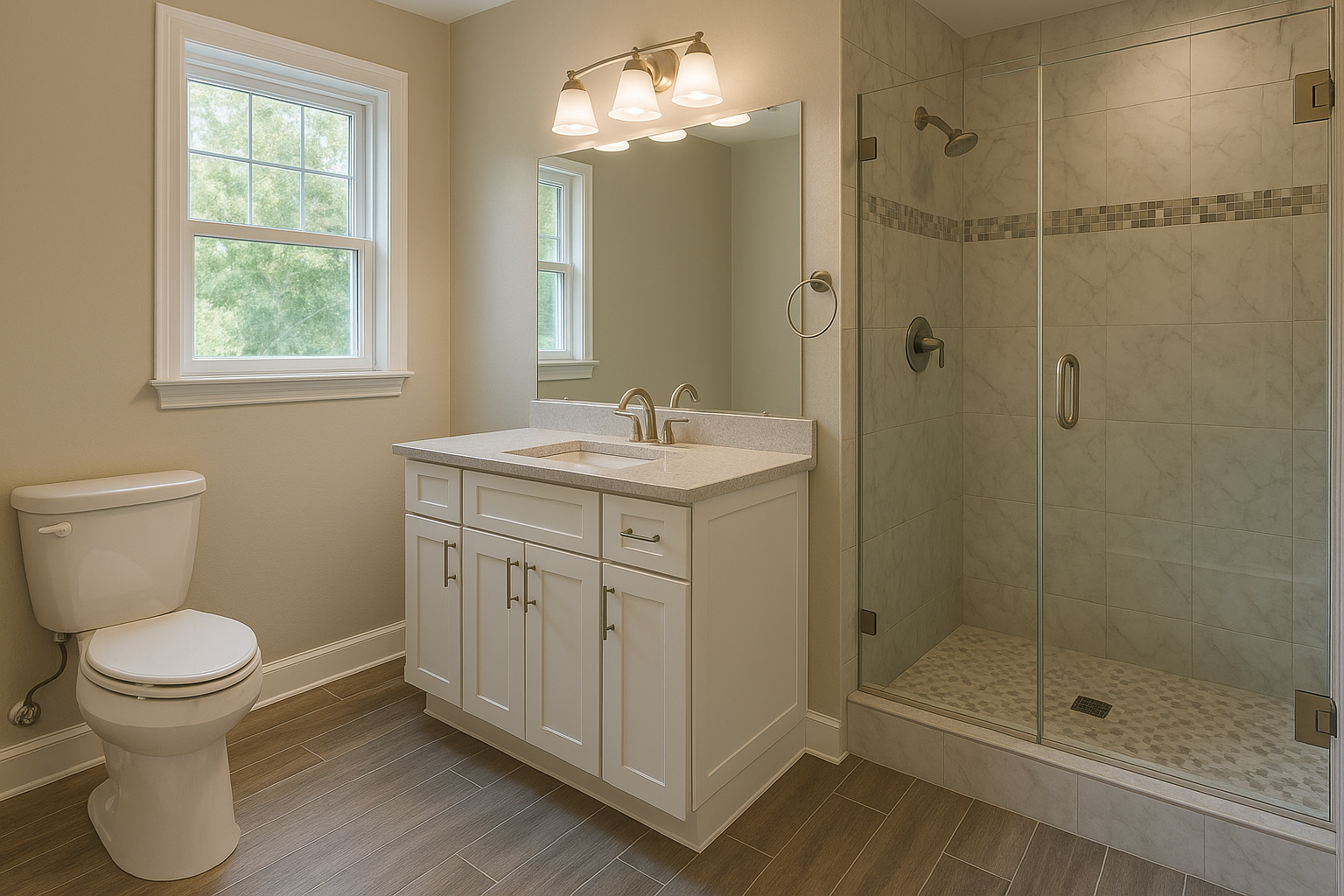
Commercial bathroom remodeling in Charlotte can address more than appearance. A renovation may help improve the layout, replace worn surfaces, update fixtures, and make routine cleaning easier. For businesses and organizations, planning the work around operating hours and building needs is an important part of getting useful results.
Plan a remodel around your building
Every commercial property has different requirements. A small office restroom may need updated finishes and fixtures, while a public-facing business may benefit from a more substantial layout review. Start by identifying what is not working today: limited privacy, difficult-to-clean surfaces, poor lighting, plumbing concerns, inadequate ventilation, or barriers to access.
A remodeling professional can review the existing room and discuss practical options based on your goals, budget, and building conditions. That conversation can help clarify which items should be addressed first and whether the project is best handled as a focused update or a more complete renovation.
- Consider the number and type of people who use the restroom.
- Review fixture placement, circulation, privacy, and storage needs.
- Choose finishes suited to frequent use and regular cleaning.
- Discuss plumbing, ventilation, lighting, and any known maintenance issues.
Make accessibility and code review part of the process
Accessibility should be considered early, not treated as a final detail. A remodel may involve clearances, door access, grab bars, fixture heights, signage, or other features that affect how people use the space. Applicable requirements can depend on the building and the scope of work. Ask your contractor how accessibility and relevant building requirements will be reviewed, and confirm whether permits or inspections apply before work begins.
Careful planning can also help avoid changes late in the project. If the building serves customers, patients, employees, or visitors with varied mobility needs, describe those needs during the initial consultation. A professional can help identify questions for further review and explain which design choices may support easier access.
Choose materials for commercial use
Commercial restrooms see frequent use, so finishes should balance appearance with durability and maintenance. Depending on the design and site conditions, options may include hard-wearing floor and wall surfaces, moisture-resistant materials, reliable hardware, and fixtures selected for the expected level of use. Easy-to-clean choices can support a consistent maintenance routine, but the best material depends on the room, cleaning products, and budget.
Lighting and ventilation matter, too. Appropriate lighting can make a room feel more welcoming and help people use it safely. Effective ventilation can help manage moisture and odors. During planning, discuss how existing systems perform and whether the project scope should include improvements.
Coordinate work to limit disruption
Restroom construction can affect employees, customers, tenants, and daily operations. Before scheduling, discuss the expected sequence of work, access to the space, material selections, and how the contractor will communicate progress. If a property has more than one restroom, ask whether the work can be phased. For a single-restroom location, consider what temporary arrangements may be needed while it is unavailable.
A clear proposal should describe the planned work, key materials, project assumptions, and items that may affect cost or timing. Ask how unexpected conditions, such as concealed damage or outdated plumbing, will be communicated and handled. Having these expectations in writing can make it easier to compare options and make informed decisions.
Getting started in Charlotte
To explore commercial bathroom remodeling in Charlotte, gather basic information about the property, the room’s problems, and the improvements you hope to make. Photos and approximate measurements can help begin the conversation, though an on-site review may be needed to assess conditions accurately. Ask about relevant commercial project experience, licensing and insurance, permitting responsibilities, scheduling, and the process for selecting finishes.
Whether you are planning a targeted refresh or a full renovation, a thoughtful consultation can help shape a practical scope. By addressing function, accessibility, durability, and downtime together, Charlotte property owners can make decisions that serve the building and the people who use it every day.
Commercial Restroom Remodeling for Charlotte Properties
Charlotte is a small Tennessee community where local businesses, offices, public-serving organizations, and other commercial properties depend on comfortable, functional facilities. A bathroom that is clean, accessible, and easy to maintain can support a better experience for visitors and staff alike. Remodeling can also be an opportunity to address aging finishes, recurring maintenance concerns, or a layout that no longer suits the way a space is used.
For property owners in Charlotte, the first step is to describe the building’s needs and arrange a conversation with a commercial remodeling professional who can discuss the scope. The project may call for fixture updates, improved lighting, durable surfaces, accessibility considerations, or a broader renovation. Because the right solution depends on the specific property, an assessment and clear written plan are useful before work is scheduled. Discussing operations and access in advance can help the team plan around the people who rely on the restroom.
Frequently Asked Questions About Bathroom Remodel in Charlotte, Tennessee
What should I plan before starting a bathroom remodel in Charlotte, Tennessee?
Start by listing what is not working in the bathroom and what you want to improve, such as storage, lighting, accessibility, or the shower layout. Measure the room and note where plumbing and electrical fixtures are located. Decide which items can stay and which need replacement, then set a budget range that includes a contingency for issues found after finishes are removed. Clear priorities help guide design choices and keep decisions focused as the project develops.
Will my bathroom remodel need permits?
Permit requirements depend on the work and the rules that apply to your property in Charlotte, Tennessee. A project that changes plumbing, electrical systems, or structural components may be treated differently from a straightforward fixture or finish replacement. Before work begins, ask the relevant local building department what approvals are required for your exact scope. A remodeler can help you identify questions to ask, but confirm requirements with the authority responsible for the property.
How long does a bathroom remodel take?
The schedule depends on the bathroom’s size, the amount of demolition, whether plumbing or electrical layouts change, and how quickly materials arrive. Work generally involves planning and ordering, removal of old finishes, any needed repairs or rough-in changes, installation, and final detailing. Hidden water damage or other conditions behind walls can affect the sequence. Ask for a project schedule that identifies major stages, decision deadlines, and how changes to the scope may affect completion.
Can I use my bathroom while it is being remodeled?
It depends on the project’s scope and how many bathrooms are available in your home. Once the toilet, shower, or water supply is disconnected, that bathroom may not be usable for part of the work. Before demolition, discuss which fixtures will be unavailable and when, whether water needs to be shut off, and how the work area will be separated from the rest of the home. If it is your only bathroom, make a practical alternative-use plan in advance.
What materials are practical for a bathroom remodel?
Choose finishes based on how the room is used, how much maintenance you are willing to do, and the look you want. For floors and shower areas, compare products designed for wet conditions and ask how they should be installed and maintained. Consider slip resistance, grout upkeep, cleaning needs, and whether surfaces suit children, older adults, or mobility needs. Good ventilation and correctly installed waterproofing also matter; attractive tile alone does not prevent moisture problems.